Imagine running a race where half the runners have to start 50 yards behind everyone else. Then, when they try to catch up, people shrug and say, “Why are you complaining? You’re in the race now.” That’s what inequality looks like. Women have always been in the race, but they haven’t always started at the same line.
Women make up half of society, yet for most of history, they were denied basic rights. The fight for women’s equality has never been about asking for special treatment. It’s about fairness. And even though progress has been made, the race isn’t over.
The women’s rights movement in the United States officially began in 1848 at the Seneca Falls Convention. Leaders such as Elizabeth Cady Stanton and Lucretia Mott wrote the Declaration of Sentiments, boldly asserting that men and women are created equal. At the time, women couldn’t vote, often couldn’t own property, and had very few legal rights, so speaking up like that was seen as outrageous. But real change rarely starts from a place of comfort and takes courage, which is exactly what came next.
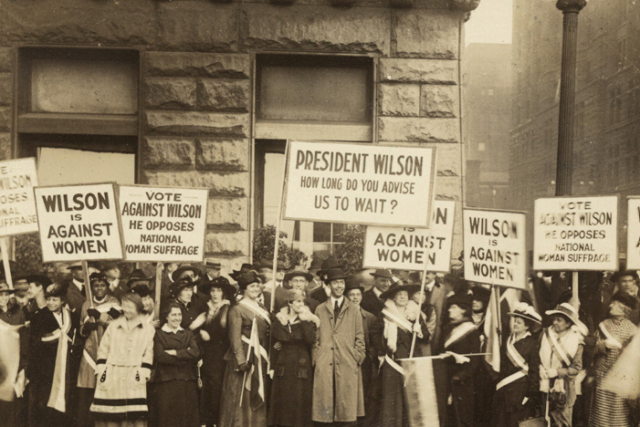
For decades, women kept pushing forward. Activists like Susan B. Anthony traveled the country giving speeches. In 1872, she was arrested for voting, literally just for trying to participate in democracy. Women marched, protested, faced ridicule, and were even jailed, but they didn’t give up. Finally, in 1920, the Nineteenth Amendment was passed, granting women the right to vote.
But that wasn’t the finish line—it was just another lap.
In the 1960s and 1970s, during the second wave of feminism, women fought for equality in the workplace and protection from discrimination. The Equal Pay Act of 1963 aimed to reduce wage gaps. Title IX in 1972 opened more educational opportunities for girls and women. Activists like Gloria Steinem used journalism and public speaking to expose inequality and push for change. Step by step, each generation built on the work of the one before it.
Today, some people ask, “Women can vote and work now—what else is there?” But if equality were truly achieved, would women still earn less on average than men? Would leadership roles still be mostly held by men? Would debates about women’s bodies still be so divisive?
The fight for women’s rights is like a relay race. The women at Seneca Falls carried the baton first. The suffragists carried it through 1920. The activists of the 1960s and 1970s pushed it even further. Now, it’s our turn.
SO WE HAVE TO KEEP RUNNING!
We can start by educating ourselves about current issues, voting in elections, supporting organizations that promote equality, and speaking out when we see injustice. For change to happen, we must make it happen. History proves that progress is possible. But it also proves that progress doesn’t just happen on its own. It takes voices. It takes action. It takes courage.
Women’s rights were worth fighting for in 1848.
They were worth fighting for in 1920.
They were worth fighting for in 1972.
And they are still worth fighting for today.

- United States